


I remember the first time I planted cowpeas in my backyard. I was amazed at how well they grew in the summer heat while my other vegetables struggled.
You might know cowpeas by different names. Some call them black-eyed peas, crowder peas, field peas, or southern peas. They’re all the same plant, just different varieties.
Here’s why I love growing them. They handle hot weather like champions. They don’t complain when rain is scarce. Best of all, they feed your soil by adding natural nitrogen.
But timing is the key to success. I learned this the hard way. Plant too early, and frost kills them. Wait for warm soil, and you’ll get healthy plants with loads of pods.
Best Time to Plant Cowpeas
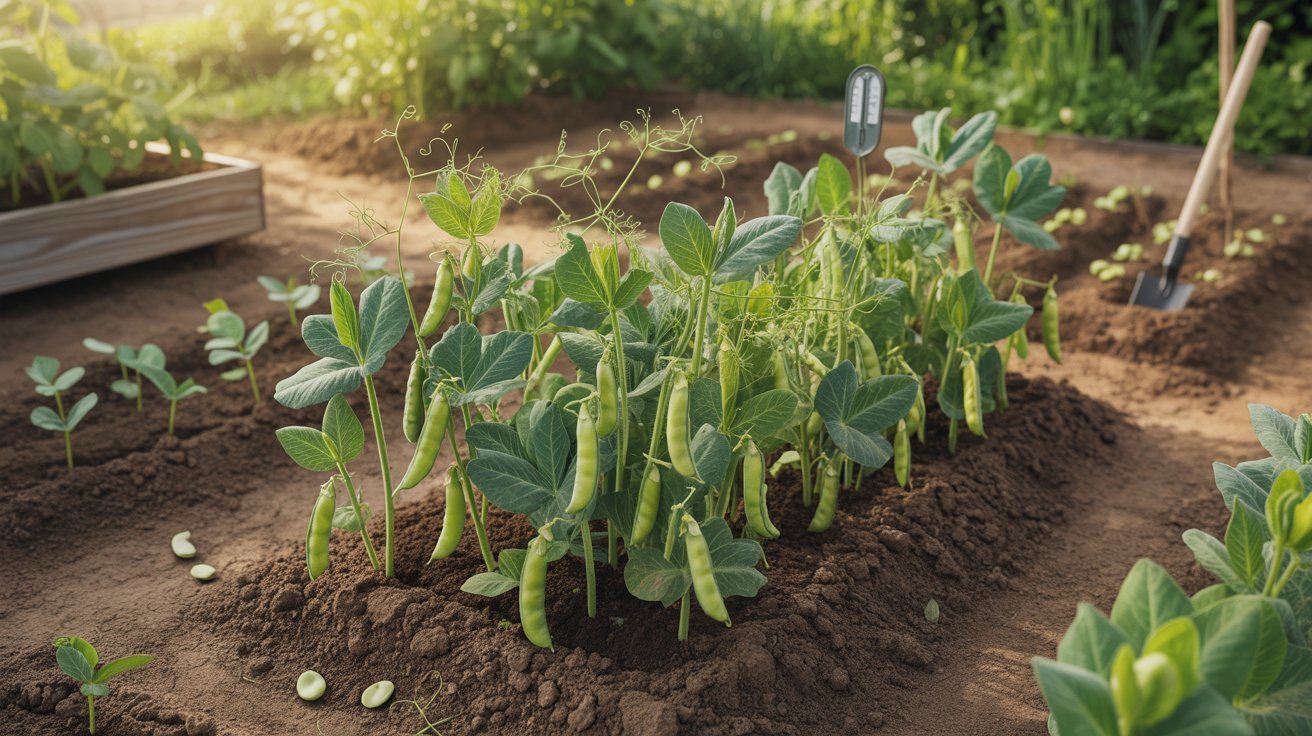
Knowing when to plant cowpeas can make or break your harvest. Let me share the timing secrets I’ve learned over the years.
Understanding Frost Dates
Cowpeas hate cold weather. I always wait at least 2 weeks after the last spring frost before planting mine. This gives the soil time to warm up properly.
Check your soil temperature before you plant. It needs to reach 65°F for good germination. I use a simple soil thermometer to be sure. Cold soil means slow growth and weak seedlings.
Regional Planting Windows
Where you live makes a big difference. In Central and South Texas, you can plant from April all the way to early November. That’s a long growing season.
If you’re in other parts of the country, follow your local frost dates. The rule is simple. Count back 80 days from your first fall frost. That’s your last safe planting date.
Successional Planting for Continuous Harvest
Want fresh cowpeas all summer long? I plant new seeds every 2 weeks. This keeps pods coming in waves instead of all at once.
This method works great for home gardens. You’ll have fresh vegetables for your table throughout the season. Food plot growers also use this approach for consistent results.
Preparing the Soil for Planting
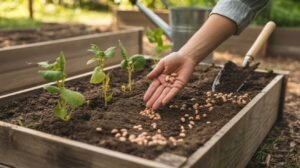
Good soil preparation sets you up for success. I spend time getting my beds ready before I plant any cowpea seeds.
Soil Requirements
Cowpeas aren’t picky about soil. They grow well in most garden spots as long as water drains properly. I’ve even grown them in slightly acidic soil without problems.
Don’t have garden space? No worries. Compact varieties do great in raised beds or containers. Just make sure your pots have drainage holes at the bottom.
Fertilization Tips
Here’s something cool about cowpeas. They make their own nitrogen through their roots. So you don’t need to add nitrogen fertilizer like other plants.
I add compost to my beds before planting. When the flowers start showing up, I give them a phosphorus-rich fertilizer. This helps with pod formation and better yields.
Weed and Pest Preparation
Clean your planting area first. I remove all weeds or spray them down a week before planting. Weeds compete for water and nutrients your cowpeas need.
Press seeds firmly into the soil. Good contact between seed and soil helps with germination. I use the back of my hand to gently press each seed down.
Planting Cowpea Seeds
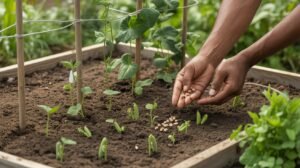
Now comes the fun part. Planting cowpea seeds is easy once you know the basics. I’ll show you exactly how I do it.
Seed Preparation
I soak my cowpea seeds in water the night before planting. This softens the hard seed coat and speeds up germination. Just put them in a bowl with room temperature water.
The seeds will swell up by morning. They’re ready to go into the ground. This simple step gives you faster and stronger seedlings.
Spacing and Depth
Bush varieties need 4 to 6 inches between each seed. Pole varieties need 6 inches of space near their support structure. Give them room to grow.
Plant seeds about half an inch to 1 inch deep. Not too deep or they struggle to push through. Cover them lightly with soil and pat it down gently.
Supporting Vining Types
Pole cowpeas need something to climb on. I set up trellises or stakes before planting. This saves me from disturbing roots later.
As the vines grow, I guide them toward the support with soft twine. Be gentle. The stems break easily if you force them. Let them wrap around naturally.
Caring for Cowpeas After Planting
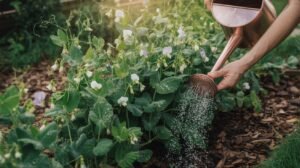
Your work isn’t done after planting. Cowpeas need some care to grow strong and produce well. Let me share my care routine with you.
Watering
Keep the soil moist after planting. I check it daily until I see sprouts breaking through. This usually takes 7 to 10 days.
Once plants are growing, water deeply in the early morning. I aim for the soil, not the leaves. Wet leaves can cause disease problems. Deep watering encourages strong root systems.
Fertilization and Mulching
I add compost around my plants as they grow. Organic matter keeps the soil healthy and holds moisture. When flowers appear, I apply phosphorus fertilizer to boost pod production.
Mulch helps control weeds and keeps soil temperature steady. I use straw or grass clippings around the base of each plant.
Pest and Disease Management
Watch out for aphids, beetles, and fire ants. I check my plants every few days for signs of damage. Catching pests early makes control easier.
Rotate your planting area each year. This breaks pest and disease cycles. If you spot diseased leaves, remove them right away. Sometimes you need to pull entire plants to protect the rest.
Harvesting Cowpeas
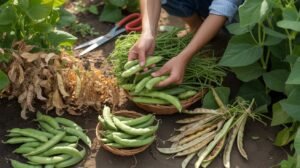
Harvest time is the reward for all your hard work. The timing depends on how you want to use your cowpeas.
Fresh Pods
Fresh cowpeas are ready about 60 days after planting. I pick them when the pods feel plump and full. You can see and feel the peas inside.
Pick pods regularly to keep plants producing more. I check my plants every 2 to 3 days during peak season. Morning is the best time to harvest when pods are crisp.
Dry Beans
For dried cowpeas, wait about 90 days. The pods turn straw-colored and feel brittle when you touch them. The leaves also start turning brown.
Watch them closely at this stage. Pods can shatter and spill seeds on the ground if you wait too long. I harvest when most pods are dry but before they split open.
Yard-Long Beans
These varieties need special attention. Harvest the slender pods when they reach 12 to 18 inches long. They grow fast, so check daily.
Pick them while still tender. Old pods get tough and stringy. I use scissors to cut them off without damaging the plant.
Saving Seeds for Next Season
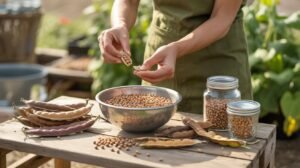
Saving your own seeds saves money and keeps your favorite varieties going. I’ve been saving cowpea seeds for years now.
Seed Maturity and Collection
Let some pods stay on the plant until they turn tan or brown. The seeds inside should feel hard when you press them. These are fully mature and ready to save.
If you grow multiple varieties, keep them 10 to 20 feet apart. This prevents cross-pollination. I mark my best plants early in the season so I remember which ones to save seeds from.
Cleaning and Storing Seeds
Break open the dried pods over a bowl. The seeds fall out easily. Remove any bits of pod material or chaff that comes with them.
Store your clean seeds in an airtight container. I use mason jars with tight lids. Keep them in a cool, dark, and dry spot. My pantry works perfectly.
Seeds stay good for 3 to 4 years when stored properly. I label each jar with the variety name and year. This helps me use the oldest seeds first.
Conclusion
Growing cowpeas has become one of my favorite garden activities. The key is waiting for warm soil and planting after the last frost. Follow the steps I’ve shared, and you’ll have great results.
I always recommend succession planting every 2 weeks. This gives you fresh pods all season long. Save seeds from your best plants too. You’ll have free seeds for next year.
Cowpeas do more than feed your family. They improve your soil naturally and attract helpful wildlife to your garden. They handle heat and dry spells better than most crops. Give them a try this season. You won’t regret it.
Frequently Asked Questions
When is the best time to plant cowpeas?
Plant cowpeas at least 2 weeks after your last spring frost when soil reaches 65°F. In warmer regions like Texas, you can plant from April through early November for multiple harvests.
How long does it take for cowpeas to grow?
Fresh cowpea pods are ready in about 60 days after planting. If you want dried beans, wait 90 days or until the pods turn brown and brittle.
Do cowpeas need a lot of water?
Cowpeas are drought-tolerant once established. Keep soil moist until germination, then water deeply in the morning when needed. They handle dry conditions better than most vegetables.
Can I grow cowpeas in containers?
Yes, compact bush varieties work great in containers and raised beds. Make sure your pots have good drainage holes and are at least 12 inches deep for healthy root growth.
How far apart should I plant cowpea seeds?
Bush varieties need 4 to 6 inches between seeds. Pole varieties need 6 inches of spacing near their support structure. Plant seeds half an inch to 1 inch deep in the soil.


