


Forsythia flowers bloom when? My gardening friends frequently ask me this question. These bright yellow blossoms are one of the first signs that winter is finally over.
This guide will discuss the exact timing of forsythia blooms and the variables that affect them. Learn which types bloom first, when they usually bloom, and how to care for them to produce more flowers.
I have been growing forsythia for a long time, so I am aware of how challenging timing and upkeep can be. Everything from pruning schedules to regional variations is covered in this article.
All I can hope is that you keep enjoying those lovely yellow blooms each year. Together, we can support the growth of your forsythia.
What is Forsythia?
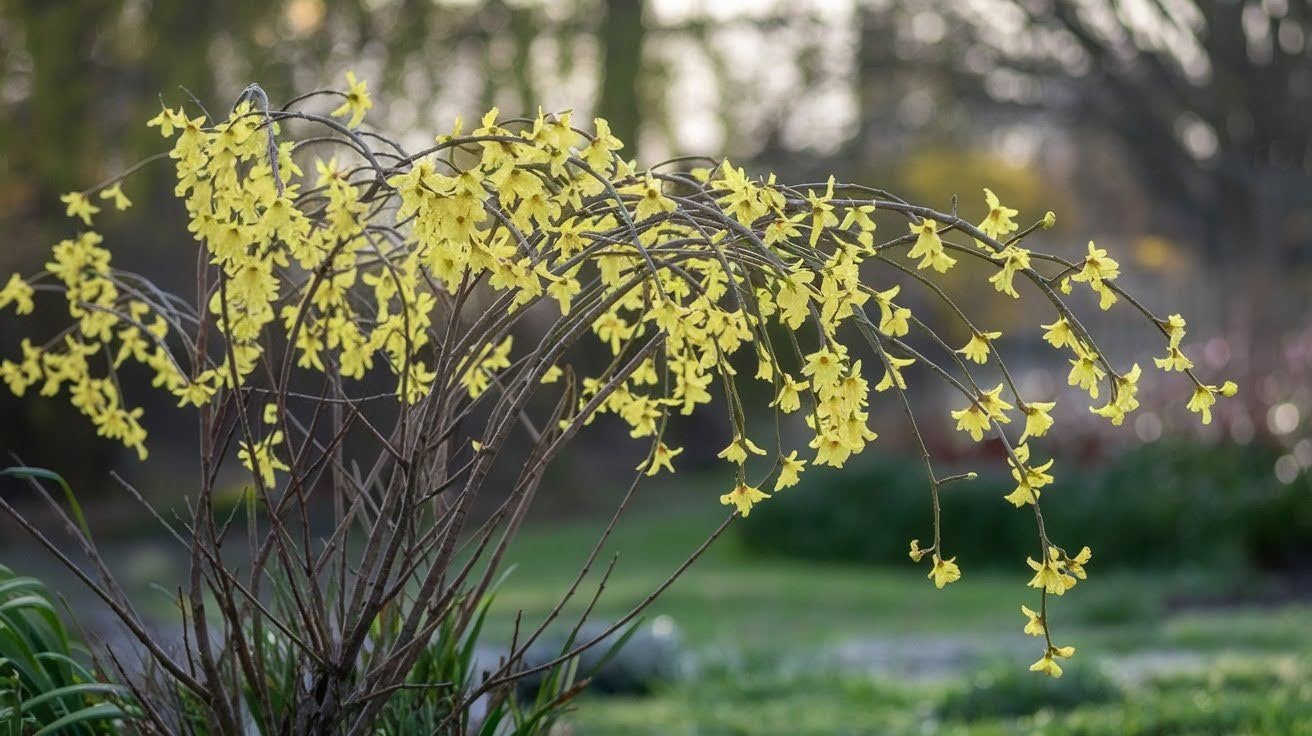
Forsythia is a deciduous shrub that explodes with yellow flowers each spring. The blooms appear on bare branches before any leaves come out.
These shrubs are tough. They handle cold winters and don’t need much care once established.
Most forsythia grows 8 to 10 feet tall and wide. Some varieties stay smaller. The branches arch gracefully and create a fountain-like shape.
I love forsythia because it’s reliable. Year after year, it tells me spring is here. The bright yellow color lifts everyone’s mood after a long winter
Forsythia Flowering Time
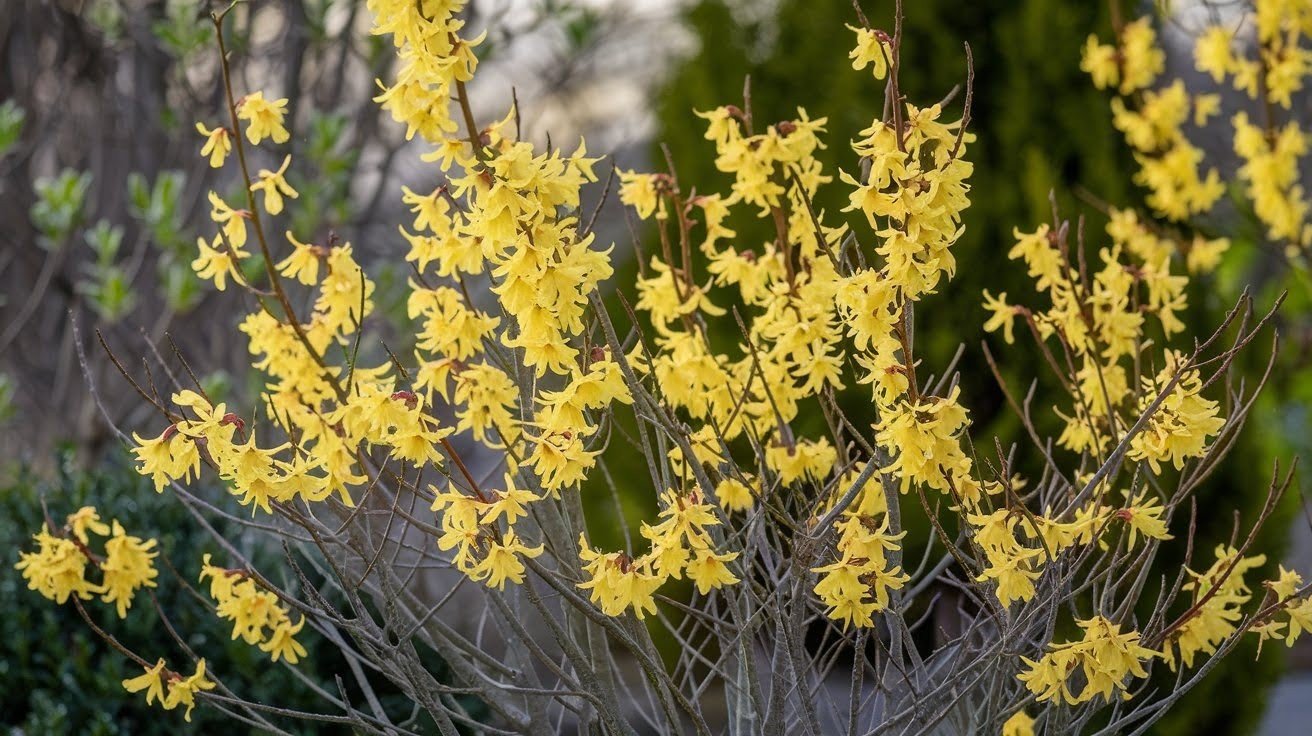
Learn when these cheerful shrubs burst into bloom and what makes them flower at different times.
Forsythia blooms from mid-March to mid-April. The flowers last 10 to 14 days and appear before any leaves emerge.
Temperature affects timing most. Warm weather brings early blooms. Cold delays them. Full sun produces more flowers than shade.
Location matters too. Iowa sees blooms in early to mid-April. The Pacific Northwest gets flowers by mid-March. Older shrubs bloom fuller than young plants. Wrong pruning can remove next year’s buds.
Seasonal Care to Encourage Bloom
Simple care steps that help your forsythia produce more flowers each spring without much fuss.
Pruning for Optimal Flowers
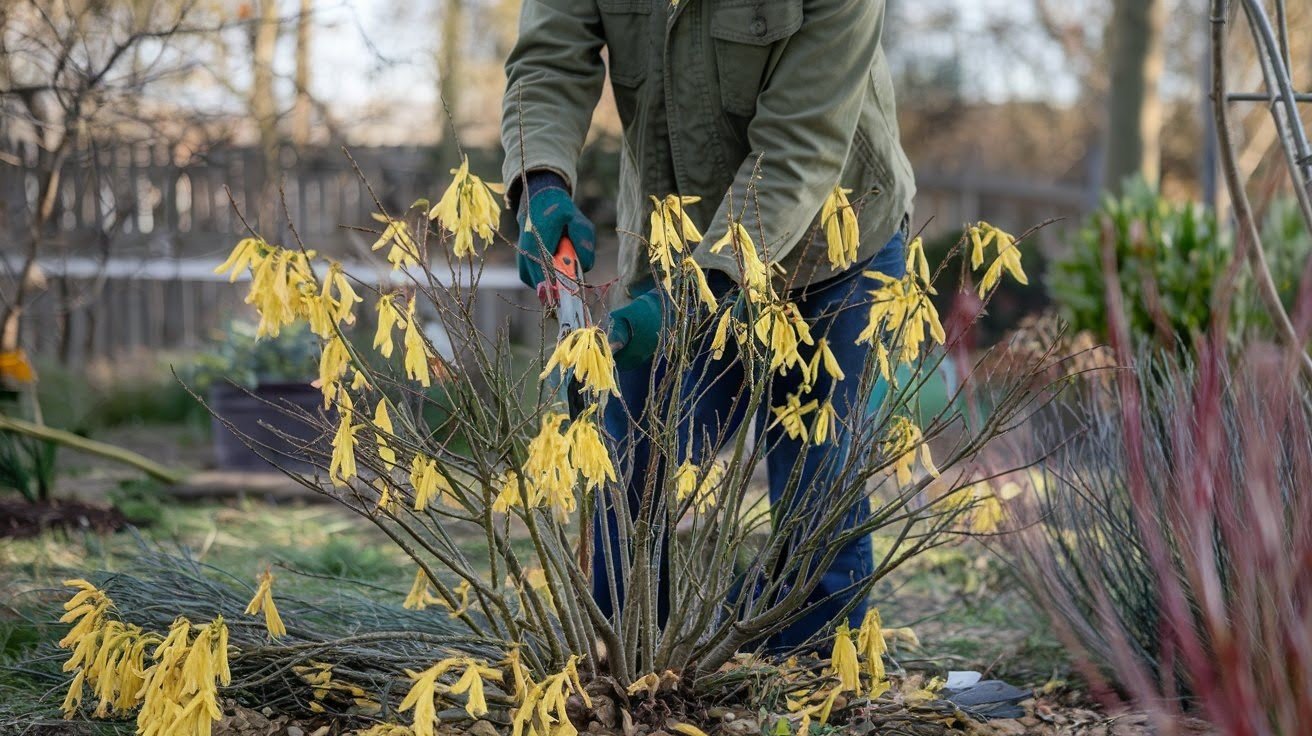
Timing is everything with pruning. Cut your forsythia right after the flowers fade, not before. If you prune in fall or winter, you’re cutting off flower buds.
I remove about one-third of the oldest canes each year. These are the thickest, darkest stems at the base. This keeps the shrub young and encourages strong blooms next season.
Cut old canes all the way to the ground. Don’t just trim the tops.
Planting Tips
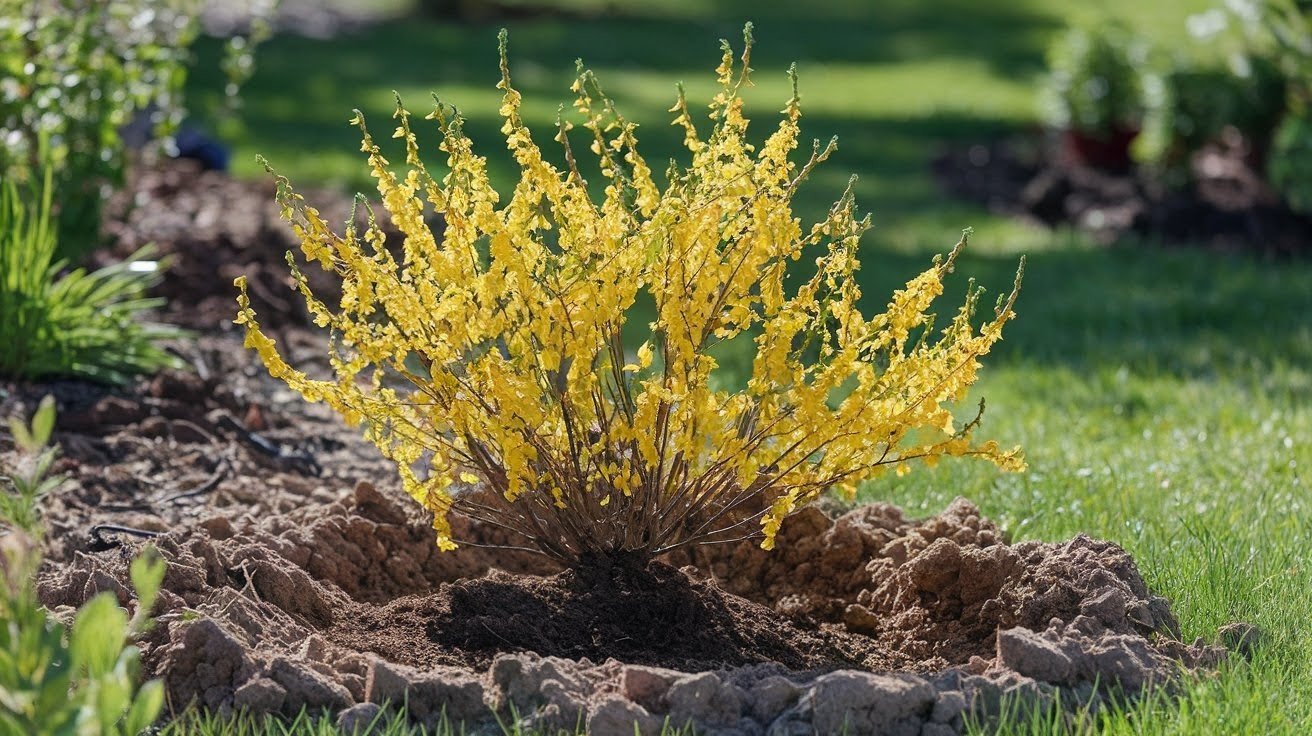
Full sun is best for flowering. Your forsythia needs lots of light to produce all those blooms.
Make sure the soil drains well. Forsythia hates wet feet. If water sits around the roots, the plant struggles.
Space is important too. These shrubs get big. Give them room to spread out.
Watering & Fertilizing
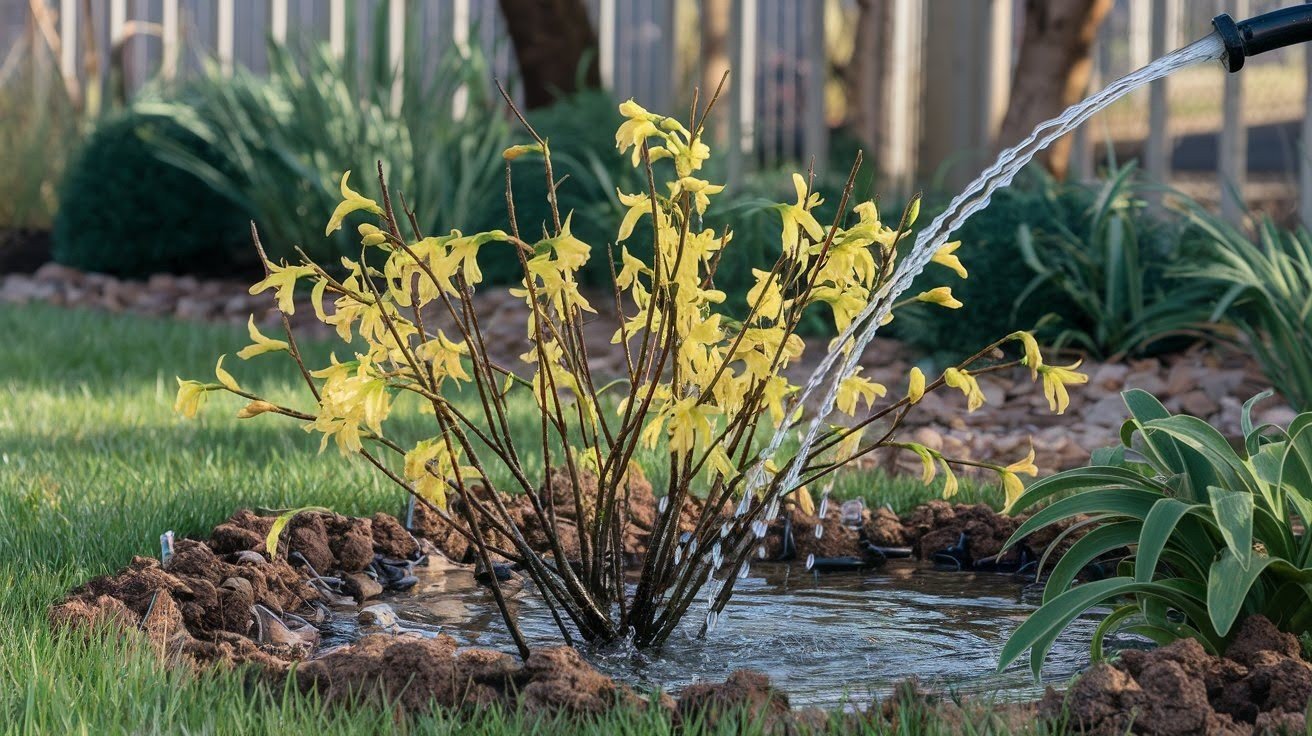
Forsythia is pretty low-maintenance once established. You don’t need to fuss over it much.
Water during drought periods. If you go weeks without rain, give the shrub a good soak.
Fertilizer is optional. Most forsythia does fine without it. If you want to feed yours, do it lightly in spring. Adding compost when you plant helps with future blooms.
Notable Blooming Cultivars
Popular varieties that bloom reliably and handle different climates, giving you options for your yard.
Some forsythia varieties bloom earlier or handle cold better than others.
‘Meadowlark’ blooms in early spring and handles harsh winters well. It’s a solid choice for cold regions.
‘Northern Sun’ blooms very early and survives freezing temperatures. The flowers are bright and plentiful.
‘Sunrise’ has medium yellow flowers and grows in a compact shape. Good for smaller yards.
Other great options include ‘Lynwood Gold’ with its large flowers, ‘Maluch’ which stays small, and ‘Fiesta’ with variegated leaves.
Pick a variety that fits your climate and space. All of them will give you that classic yellow spring display.
Recommended Blooming Cultivars
Popular varieties that bloom reliably and handle different climates, giving you options for your yard.’Meadowlark’ and ‘Northern Sun’ are best for cold climates.
Both bloom early and survive harsh winters.
‘Sunrise’ and ‘Maluch’ stay compact for small gardens. ‘Maluch’ reaches only 2 to 3 feet.’Lynwood Gold’ produces large golden flowers. ‘Fiesta’ has variegated leaves for summer interest.Pick a variety that fits your climate and space.
Propagation for Extended Bloom Coverage
Multiply your forsythia using simple techniques to create more plants and fill your yard with spring color.You can grow new forsythia from existing shrubs using cuttings or layering.
For cuttings, cut 4 to 6 inch stems in late spring. Stick them in moist soil. Roots form in 4 to 8 weeks.For layering, bend a branch to the ground.
Bury part of it under dirt and hold it down with a rock. Cut it free next spring.Start with one shrub and create many more for your yard.
Common Issues Affecting Bloom
Problems that prevent flowering and how to spot them before your forsythia disappoints you each spring.
- Cold damage kills flower buds during harsh winters. Choose cold-hardy varieties for freezing climates.
- Shade blocks flower production. Plant forsythia in full sun for best blooms.
- Overcrowding limits growth and flowering. Give shrubs plenty of space to spread.
- Wrong pruning timing removes next year’s buds. Prune right after flowers fade, never in fall or winter.
- Young shrubs need time to mature. New plants may take 2 to 3 years before blooming heavily.
Conclusion
Every spring, when my forsythia blooms, I still get excited. The bright yellow blooms herald the arrival of warmer weather.
You now understand when and how to take care of forsythia flowers. Immediately after flowering, prune. Give it some sunlight. Avoid overanalyzing the care. These shrubs are forgiving, I assure you.
How has your experience been with forsythia? Tell us about your blossoming stories in the comments section below. While you’re here, check out our other spring shrub guides.
Frequently Asked Questions
What month does forsythia bloom?
Forsythia blooms from mid-March to mid-April in most areas. The exact month depends on your local climate and that year’s weather patterns.
Why didn’t my forsythia bloom this year?
Late pruning is the most common reason. If you pruned in fall or winter, you removed the flower buds. Lack of sunlight or an unusually cold spring can also prevent blooming.
How long do forsythia flowers last?
The blooms last about 10 to 14 days. This gives you roughly two weeks of yellow color before the flowers drop and leaves appear.
Can I force forsythia branches to bloom indoors?
Yes, you can cut branches in late winter and bring them inside. Put them in water in a warm room, and they’ll bloom within a week or two.
Does forsythia bloom on old or new wood?
Forsythia blooms on old wood from the previous year’s growth. This is why you should prune right after flowering to avoid cutting off next year’s buds.


