


Do you check your plants each morning and feel that quick panic when you see something moving? I get it.
There’s nothing worse than caring for your houseplants only to find bugs making themselves at home.
Here’s the honest answer: yes, indoor plants can attract bugs. But before you feel discouraged, know that this is completely manageable.
I’ve been there, staring at tiny pests, wondering where I went wrong. The good news? Once you understand what attracts these insects and why they stick around, you can stop them.
In this guide, I’ll show you which bugs target your plants, what brings them in, and simple ways to keep them away.
Do Indoor Plants Really Attract Bugs?
Yes, indoor plants can attract bugs. But not every plant or home will have this problem. It depends on your environment and care routine.
Bugs love moisture, warmth, and organic matter. Your indoor space can feel perfect to them if conditions are right.
Plants in humid spots with poor airflow are most vulnerable. Stagnant air and damp soil create ideal breeding grounds for pests.
Why Indoor Plants Attract Bugs
Overwatering is the main issue. Wet soil attracts fungus gnats and other pests that lay eggs there.
Poor air circulation makes it worse. Bugs thrive in still air around cramped plants.
High humidity attracts insects like spider mites and aphids. Some moisture is good, but too much invites trouble.
Organic potting soil feeds fungal growth and soil pests.
No natural predators exist indoors. Outside, ladybugs control pests. Inside, bugs multiply freely.
Which Indoor Plants Are Most Prone to Bugs?
Ferns and calatheas need lots of humidity. Their moist soil attracts gnats, mealybugs, and aphids.
Tropical plants like philodendrons and palms struggle with spider mites and scale insects due to their moisture needs.
Flowering plants like African violets and orchids often get thrips and whiteflies on their blooms and new growth.
If you have these plants, just watch them more closely and follow good care practices.
Common Bugs Found on Indoor Plants
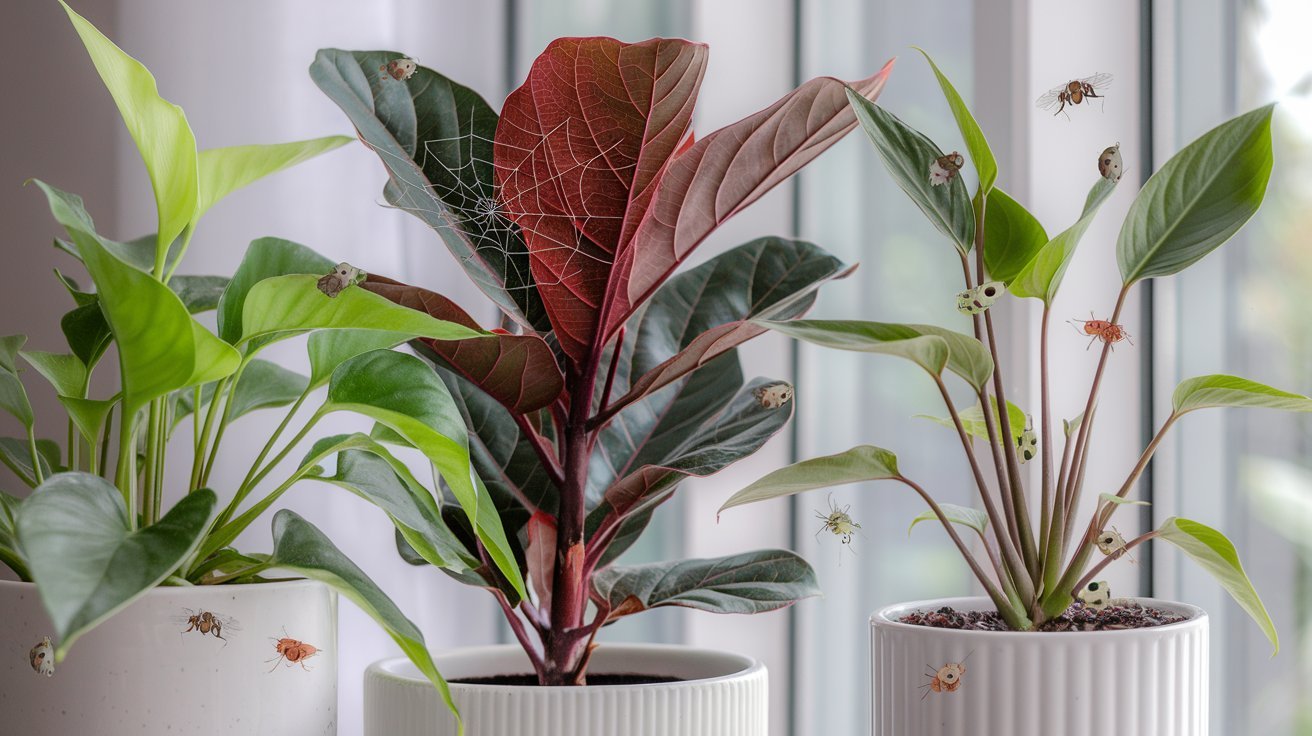
Several types of insects love indoor plants. Each pest has its own behavior and feeding style. Here’s what you need to know about the most common ones.
- Aphids: Aphids are small, pear-shaped bugs that suck sap from your plants. They’re usually green, black, or brown.You’ll find them clustering on new growth and the undersides of leaves. They multiply fast, so catch them early.
- Spider Mites: These tiny reddish-brown pests are actually arachnids, not insects. They’re so small you might need a magnifying glass to see them.Spider mites spin fine webs on your plants. They thrive in dry indoor air and feed on leaf cells, leaving yellow spots behind.
- Mealybugs: Mealybugs look like tiny cotton balls stuck to your plant. They’re slow-moving and feed on stems and leaves.They leave behind a sticky substance called honeydew. This residue attracts ants and can cause mold problems.
- Scale Insects: Scale insects hide under brown or gray shells attached to stems and leaf undersides. They look like bumps on your plant.These pests are stubborn. You’ll need to scrape them off manually since their protective coating shields them from sprays.
- Fungus Gnats: Fungus gnats are small black flies that hover around your plants. They emerge from overly damp soil.The adult flies are annoying but harmless. Their larvae live in the soil and feed on decaying matter and roots, which can damage young plants.
- Whiteflies and Thrips: Whiteflies are tiny winged insects that fly up in a cloud when you touch your plant. Thrips are slender and harder to spot.Both feed on plant juices. They cause leaves to turn yellow, curl, or develop silvery streaks. Left unchecked, they weaken your plants significantly.
How to Tell If Your Indoor Plants Have Bugs
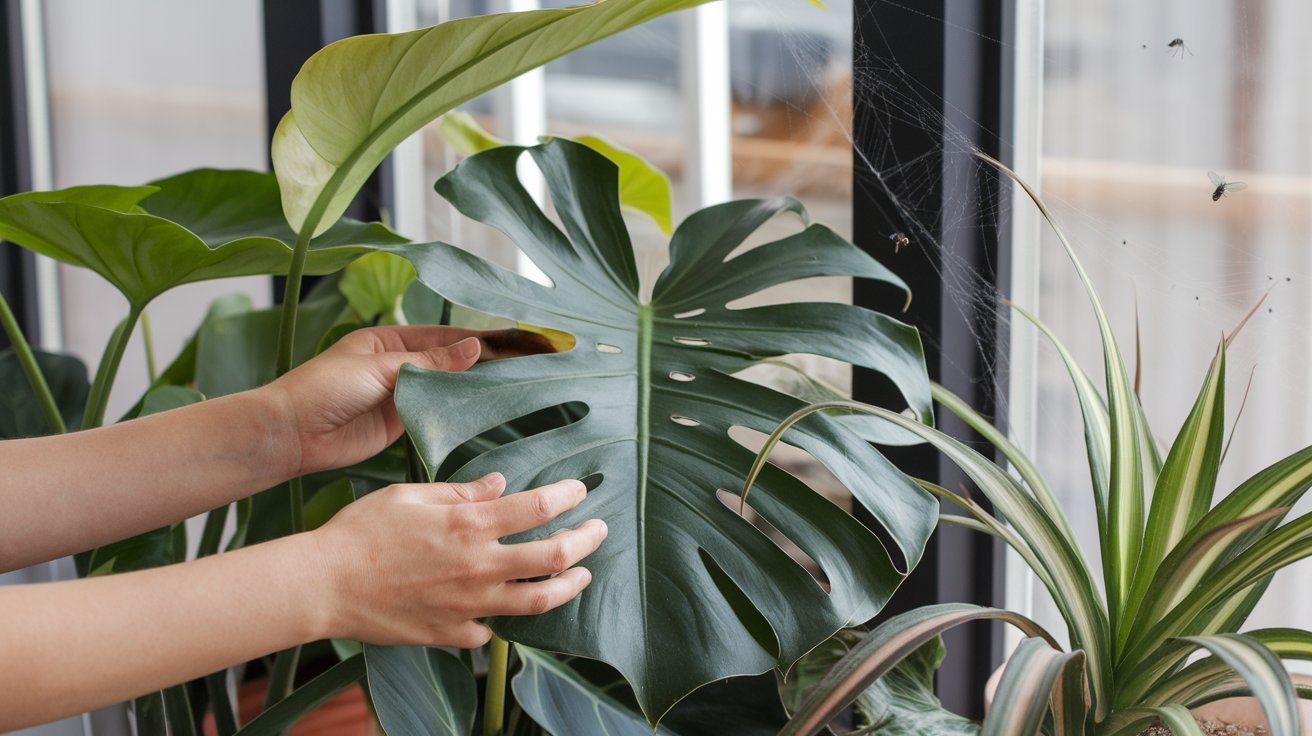
Catching a bug problem early makes treatment much easier. Here are the warning signs to watch for.
Check your plants regularly for tiny bugs crawling on leaves or stems. Look for fine webs between leaves. Run your finger along a leaf to feel for sticky residue from pests.
Notice if leaves suddenly turn yellow or curl up. Small flies hovering near your pots are usually fungus gnats or whiteflies. Your plant might look droopy even when the soil is moist, which signals root damage from larvae.
If something looks off with your plant, check the soil and leaf undersides carefully.
How to Prevent Bugs on Indoor Plants
Prevention is your best defense against plant pests. These simple habits will keep bugs away and your plants thriving.
1. Water Wisely

Overwatering is the fastest way to invite bugs into your home. Let the top inch or two of soil dry out between watering sessions.
Stick your finger in the soil to check moisture levels before adding more water. Damp soil attracts fungus gnats and creates conditions other pests love.
2. Improve Air Circulation
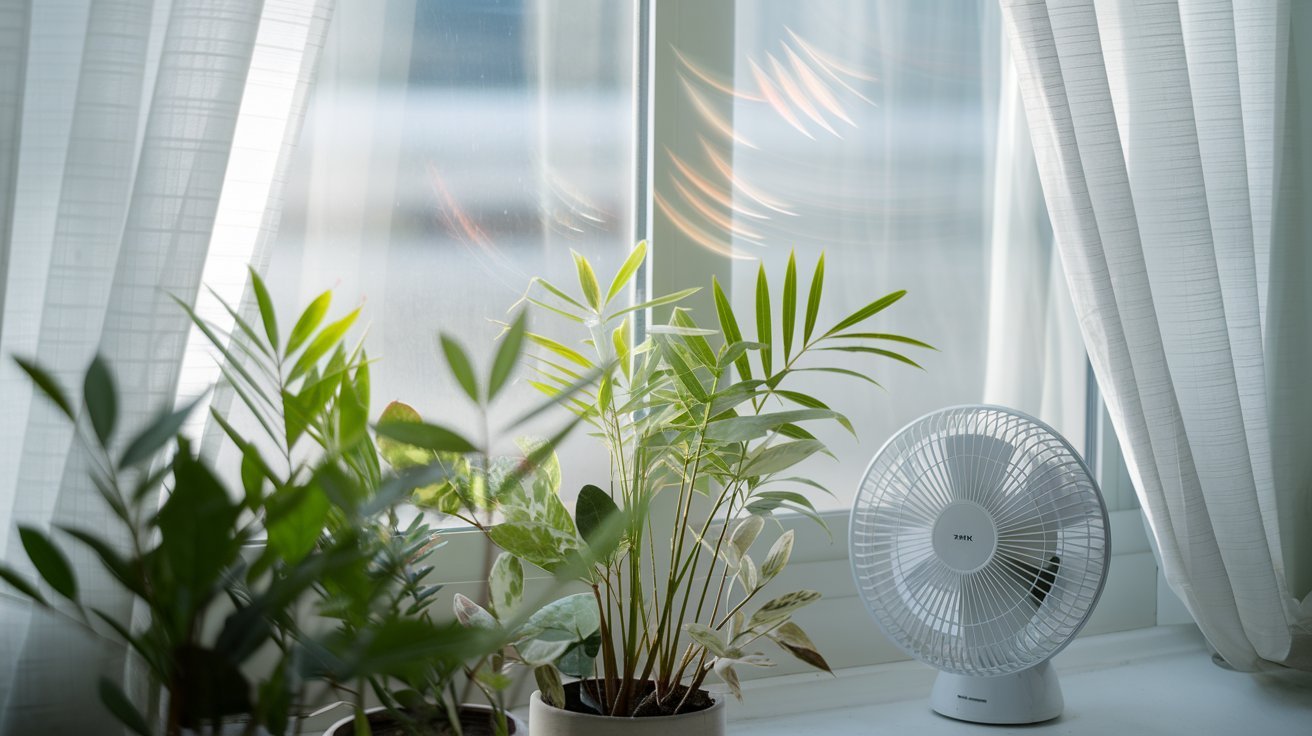
Stagnant air is a bug’s best friend. Use a small fan near your plants or open windows periodically to keep air moving.
Good circulation reduces humidity buildup and makes your space less appealing to pests like spider mites and aphids.
3. Inspect New Plants

Never trust that a new plant is pest-free. Check leaves, stems, and soil carefully for eggs or larvae before bringing it home. Look under leaves and around the base of the plant.
Quarantine new plants in a separate room for two to three weeks. This gives you time to spot any hidden problems before they spread to your other plants.
4. Keep Pots and Soil Clean

Remove fallen leaves and debris from the soil surface. Dead plant matter attracts fungus gnats and other pests.
When repotting, sterilize old pots with hot soapy water or a diluted bleach solution. Clean containers prevent pest eggs from carrying over to new plants.
5. Maintain Plant Health
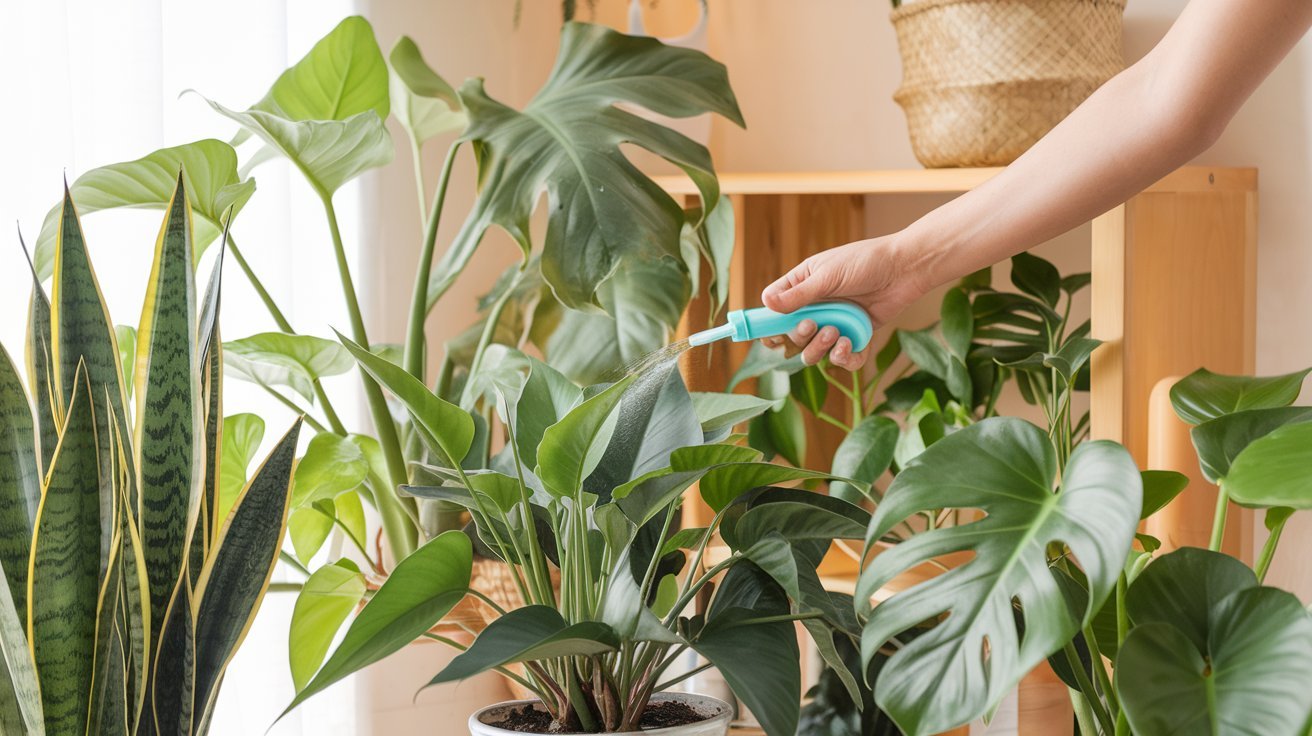
Healthy plants naturally resist pests better than weak ones. Give your plants proper light, water, and care.
Fertilize moderately because too much nitrogen creates soft, tender growth that bugs love. A strong plant can fight off minor pest problems on its own.
Natural Remedies for Bug Control
When bugs do show up, you don’t need harsh chemicals to get rid of them. These natural solutions work well and are safe for indoor use.
- Soap and Water Spray: Mix mild dish soap with water in a spray bottle. Spray directly on bugs to suffocate them. Rinse leaves after an hour.
- Neem Oil or Pyrethrum Spray: These organic insecticides are safe for indoor use. Spray affected plants weekly until pests disappear.
- Sticky Traps: Place yellow or blue traps near plants to catch fungus gnats and whiteflies. Replace when full.
- Alcohol Wipes: Dab rubbing alcohol directly on mealybugs and scale insects with a cotton swab. It kills them instantly.
- Natural Repellent Plants: Grow mint, rosemary, or basil near your houseplants. Their strong scents repel insects naturally.
Final Thoughts
Yes, indoor plants can attract bugs, but don’t let that scare you away from growing them. With proper care and attention, you can prevent most infestations before they start.
I’ve learned that the key is staying observant. Check your plants regularly, water them correctly, and keep the air moving. These simple habits make all the difference.
You don’t need to be perfect. Just be consistent. A few minutes of care each week will keep your plants healthy and pests away. Trust me, the joy of having green, thriving plants in your home is absolutely worth it. You’ve got this.
Frequently Asked Questions
Can indoor plants attract bugs even in clean homes?
Yes, bugs are attracted to the conditions around your plants, not the cleanliness of your home. Moisture, humidity, and organic soil draw pests in regardless of how clean you keep your space.
How often should I check my indoor plants for bugs?
Check your plants at least once a week during regular watering. Look under leaves, along stems, and around the soil surface for any signs of pests or damage.
Are bugs on indoor plants harmful to humans?
Most plant pests are harmless to people and pets. They only feed on plants. However, large infestations can be annoying and may attract other insects like ants into your home.
Can I use outdoor soil for my indoor plants?
No, outdoor soil often contains pest eggs, larvae, and diseases. Always use sterile potting mix specifically made for indoor plants to reduce the risk of bringing bugs inside.
Will getting rid of my plants solve my bug problem?
Not necessarily. If bugs have already established themselves in your home, removing plants may not eliminate them completely. It’s better to treat the infestation and fix the conditions that attracted pests in the first place.


