


Have you noticed any white, fuzzy material on your mulch? You’re not by yourself.
I must admit that when I first saw it in my own garden beds, I was frightened. Is it harmful to have white mold on mulch? We’re here to find out.
I’ll describe that white growth in detail in this post. We will discuss whether it is harmful to you, your pets, or your plants.
I’ll also teach you how to deal with it safely and prevent its recurrence.
You don’t have to guess because I’ve done the research. Let’s address your inquiries.
What Does White Mold on Mulch Look Like?
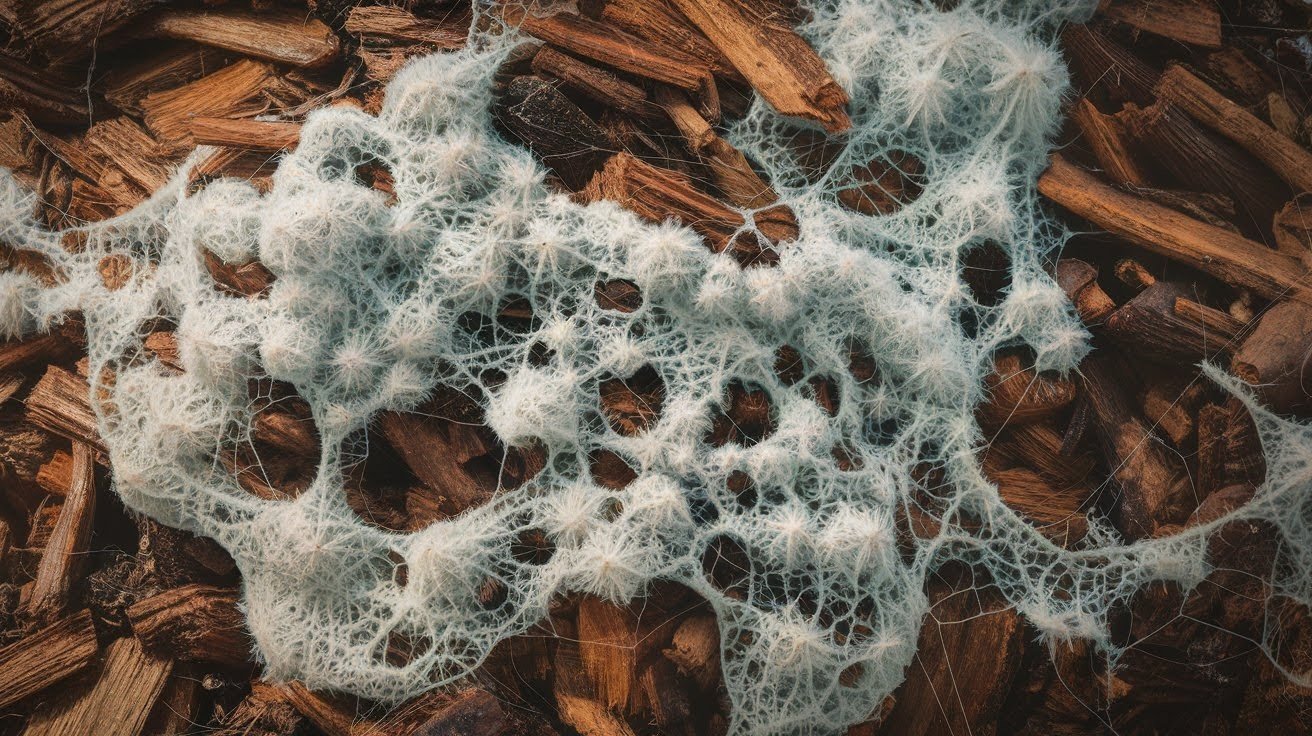
White mold on mulch shows up as fuzzy patches that can look like cotton or webbing spread across the surface.
The mold appears in white, gray, or cream shades. It looks soft and fluffy. Sometimes it spreads like a web.
You’ll usually see it after heavy rain or humid weather. It loves damp conditions.
This growth shows up most on organic mulches. Wood chips, bark, and compost are common spots. The patches tend to cluster in shady, moist areas.
What Is the White Mold on Mulch?
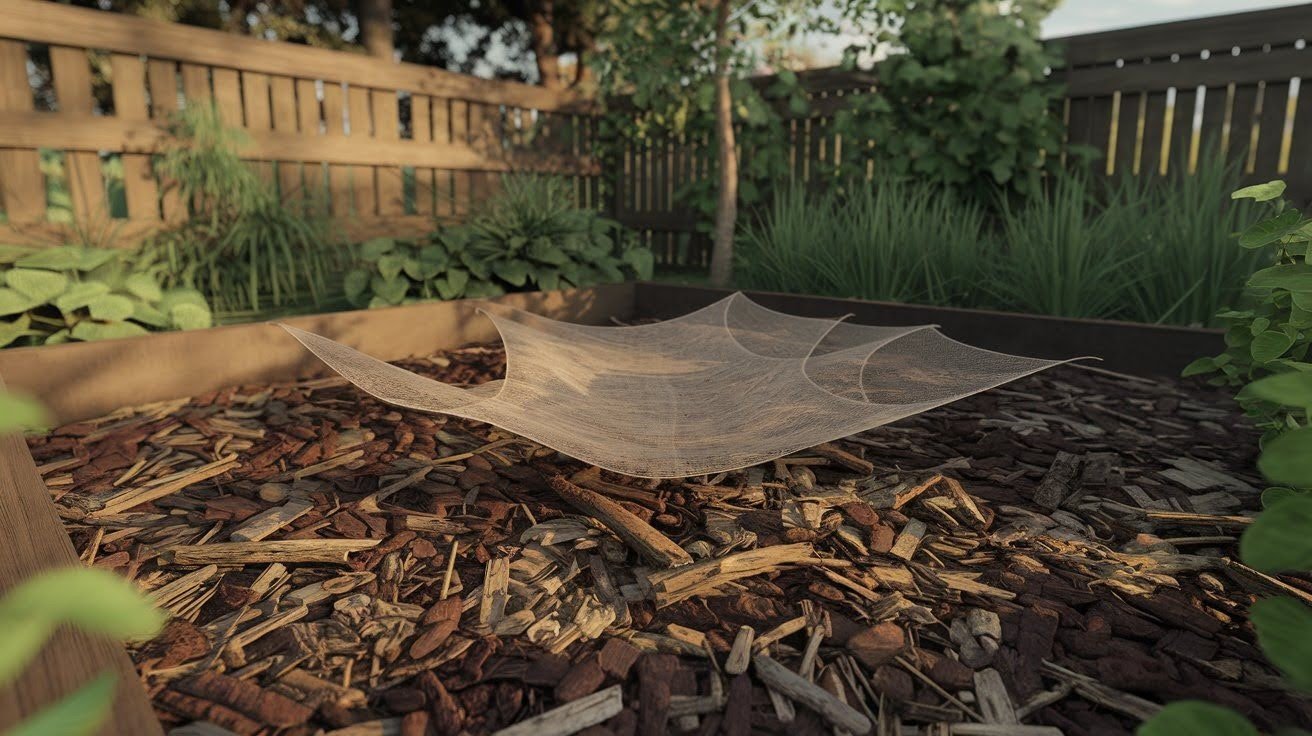
The white mold is a harmless fungus that feeds on dead plant material and helps break it down naturally.
That white stuff on your mulch is usually a saprophytic fungus. It eats dead organic matter like wood chips and bark. Common types include slime mold and fungal mycelium.
These organisms are part of nature’s cleanup crew. They break down old plant material and turn it into rich soil. This is how composting works in nature.
These molds don’t attack living things. They only consume what’s already dead. Think of them as nature’s recyclers doing important work in your garden.
Why Does White Mold Appear on Mulch?
White mold grows when mulch stays warm, damp, and shaded for extended periods of time.
Warmth gets the fungus growing. Moisture keeps it alive. Shade protects it from drying out.
Rain and overwatering create perfect conditions. Organic mulches like bark, wood chips, and compost feed microbes. They multiply fast and white mold appears.
Shaded areas see more growth. The sun can’t dry things out there.
Is White Mold on Mulch Dangerous?
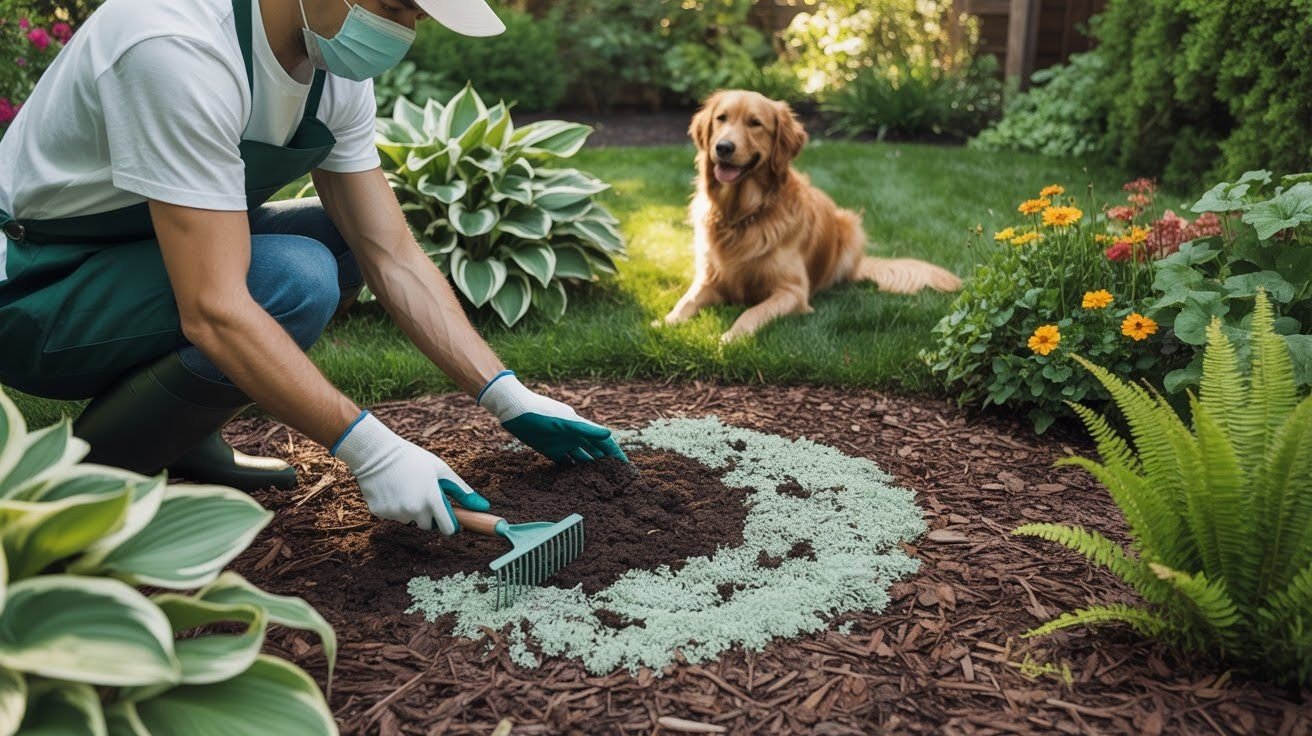
White mold on mulch is generally safe and poses minimal risk to people, pets, or plants.
To Humans and Pets
Most outdoor white molds are non-toxic. They won’t hurt you.
People with mold allergies should be careful. Don’t breathe in the spores directly. Wear gloves and a mask when handling moldy mulch.
To Plants and Soil
These fungi don’t attack living plants. They can’t infect your flowers or vegetables.
They only break down dead material. This helps your soil by adding nutrients. White mold is a sign of healthy microbial life. It’s part of the natural cycle, not a disease.
How to Safely Remove or Control White Mold
You can control white mold by improving air flow and reducing moisture in the affected areas.
Simple Maintenance Steps
- Rake through your mulch regularly. This breaks up the mold and lets air in. Circulation is key.
- Let sunlight reach the area. Pull back some mulch if you need to. Sunlight dries things out fast.
- Skip the chemical fungicides. You don’t need them. They’ll kill beneficial organisms too. That hurts your soil more than it helps.
When to Replace Mulch
- Replace mulch only if the mold is really thick. Or if you just don’t like how it looks.
- Pull out the affected mulch. Put it in your compost bin or yard waste. It will finish breaking down there.
- Add fresh mulch after the area dries out. Keep the new layer thinner.
How to Prevent White Mold on Mulch
Keep mulch layers thin, reduce watering, and store mulch properly to minimize mold growth naturally.
- Keep your mulch about 2 to 3 inches deep. Thicker layers trap moisture. Thinner layers dry faster.
- Water your garden less often. Only water when plants actually need it. Soggy mulch breeds mold.
- Store extra mulch in a dry spot with good airflow. Don’t pile it against walls or in corners.
- Buy well-aged mulch when you can. Aged mulch is more stable and breaks down slower.
When to Worry
Concern is only needed if mulch develops a bad smell or black, slimy texture instead of fluffy white mold.
Most white mold is harmless. But a foul odor is a red flag. Black, slimy mulch means anaerobic decay. That’s different from regular mold.
Remove that mulch right away. Replace it with fresh, dry material. Spread it thinner this time.
Indoor mold needs professional assessment. Outside mold on mulch? Usually nothing to worry about.
Conclusion
Is white mold on mulch harmful, then? Not at all. It’s simply nature taking its course.
After I realized what it was, I stopped worrying about it. Your plants are doing well. Your animals are secure. You’re also safe.
Simply keep the mulch from becoming too wet and turn it periodically. The white fuzz will go away by itself.
Have inquiries? Leave a comment below with them. Tell me what you’re observing in your garden, please.
Frequently Asked Questions
Can white mold on mulch make me sick?
For most people, no. The mold is harmless outdoors. People with mold allergies should wear gloves and a mask when handling it. Avoid breathing the spores directly.
Should I remove white mold from my mulch?
You don’t have to remove it. Raking through the mulch helps air circulation and usually makes it go away. Replace mulch only if the growth is heavy or you find it unsightly.
Does white mold mean my mulch is bad?
No, it means your mulch is breaking down naturally. White mold is a sign of active decomposition. This actually enriches your soil over time. It’s a good thing, not a problem.
Will white mold hurt my plants?
White mold won’t harm your plants at all. It only feeds on dead organic matter like wood chips. Your living plants are completely safe. The mold might even help by adding nutrients to soil.
How do I stop white mold from growing back?
Keep mulch layers around 2 to 3 inches deep. Water less frequently. Rake the mulch occasionally to improve airflow. Store unused mulch in a dry, ventilated area before spreading it.


