


Are you concerned that your pine tree may be dying? I’ve been there. It’s awful to see a tree you love deteriorate, especially when you don’t know if it can be saved.
Time, money, and heartache can be avoided by learning how to determine whether a pine tree is dead. The important visual cues are shown to you in this guide.
You’ll find the distinction between death and dormancy, recognize early warning indicators, and know when to seek assistance.
I’ll go over simple at-home tests, bark issues, needle color changes, and when removal is required.
Once you know what to look for, the majority of signs are simple to identify. Let’s investigate the condition of your tree.
Understanding the Difference Between a Sick, Dormant, and Dead Pine Tree
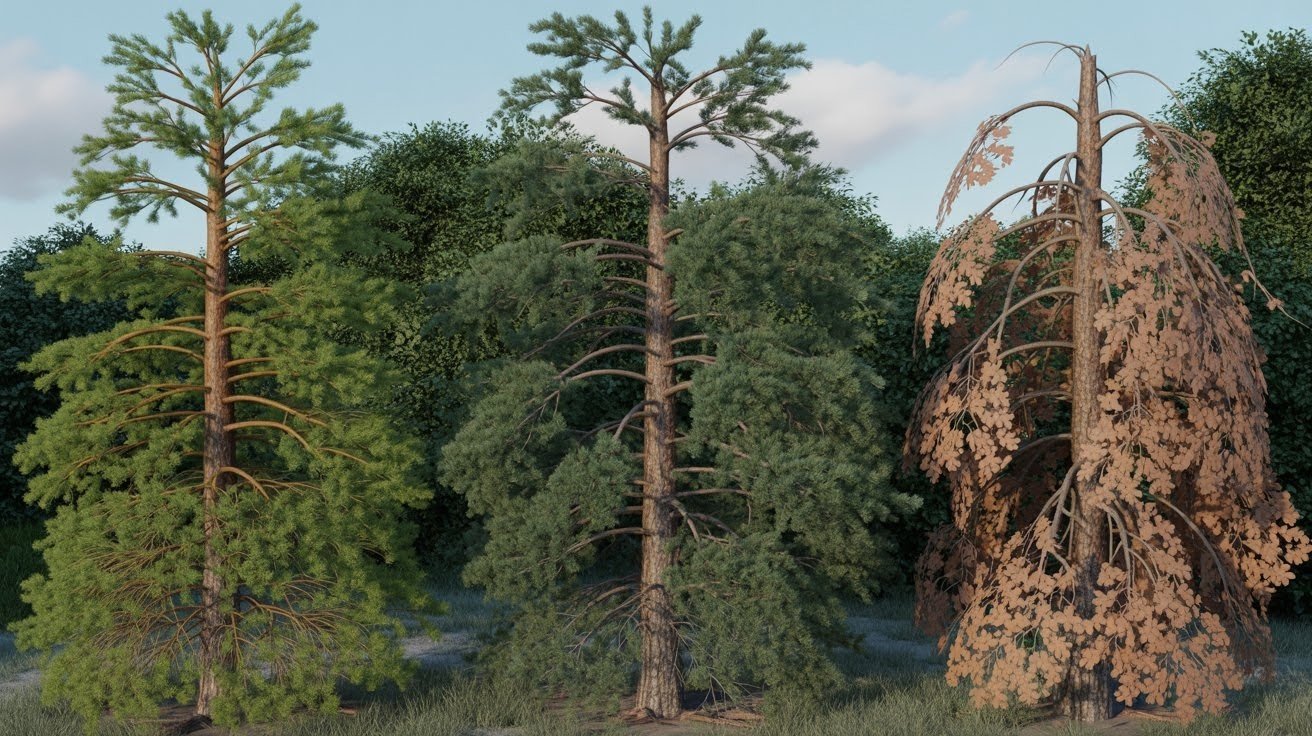
Knowing whether your pine tree is dormant, sick, or dead helps you make the right decisions about care or removal.
| Sign | Dormant Tree | Sick/Dying Tree | Dead Tree |
| Needle Color | Some interior browning, outer growth stays green | Partial browning that spreads or persists | Completely brown or gray throughout |
| Needle Drop | Normal fall shedding of older interior needles | Excessive or premature needle loss | Most or all needles have fallen off |
| Branch Flexibility | Branches bend without breaking | Some branches are brittle, some are flexible | All branches snap easily |
| Bark Condition | Intact and firmly attached | Peeling in sections may show damage | Large areas peeling, exposing dry wood |
| New Growth | Fresh green needles appear in spring | Little to no new growth | No new growth at all |
| Scratch Test | Green or white moist tissue under the bark | Mixed results, some green, some brown | Brown, dry tissue throughout |
|
Seasonal Changes |
Temporary color dulling in winter | Persistent discoloration year-round | No seasonal variation, stays brown |
| Recovery Potential | Fully recovers in spring | May recover with treatment | No recovery possible |
Key Signs Your Pine Tree May Be Dying or Dead
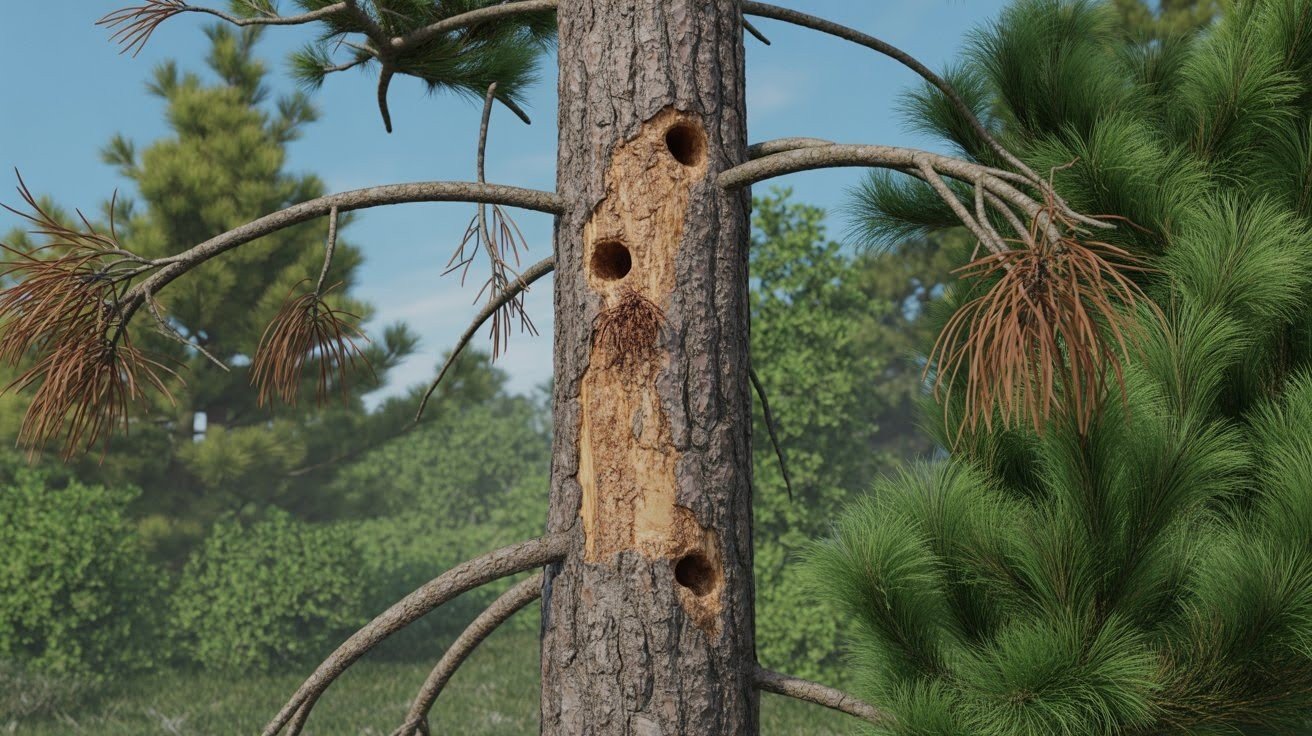
Watch for these specific symptoms that indicate serious health problems or death in pine trees beyond normal seasonal changes.
A. Discolored or Brown Needles
Needles turning red, yellow, or brown and staying that way for months signal trouble. Browning location reveals the cause: bottom-up means drought or root issues, top-down suggests beetles or disease, and middle sections indicate fungal infection.
B. Early or Excessive Needle Drop
Normal shedding happens gradually in fall with some needle drop. Abnormal shedding means large quantities fall off, leaving branches bare or sparse. This indicates stress from pests, disease, or environmental problems.
C. Bark Problems
Large sections of peeling bark signal serious problems. Look for pitch tubes (popcorn-like dried sap blobs) where bark beetles entered. Vertical cracks also indicate beetle activity or disease.
D. Visible Holes or Sawdust
Small round holes mean bark beetles or wood borers have infested your tree. Check the base for sawdust or wood shavings. Fresh sawdust means current infestation; old sawdust suggests past problems.
E. Leaking or Excessive Sap
Small amounts of resin are normal. Large sap flows down the trunk indicate injury or infection. White or unusually sticky sap suggests fungal disease or severe stress.
F. Large Cankers or Fungal Growths
Cankers are swollen, sunken, or cracked areas indicating fungal disease. Mushrooms or shelf fungi on the trunk mean advanced internal decay and compromised structural integrity.
G. Broken, Weak, or Hanging Branches
Dead branches snap easily with light pressure or hang loosely. Multiple broken branches suggest internal decay has weakened the tree, creating safety hazards during storms.
Diagnosing the Problem Based on Where Browning Starts
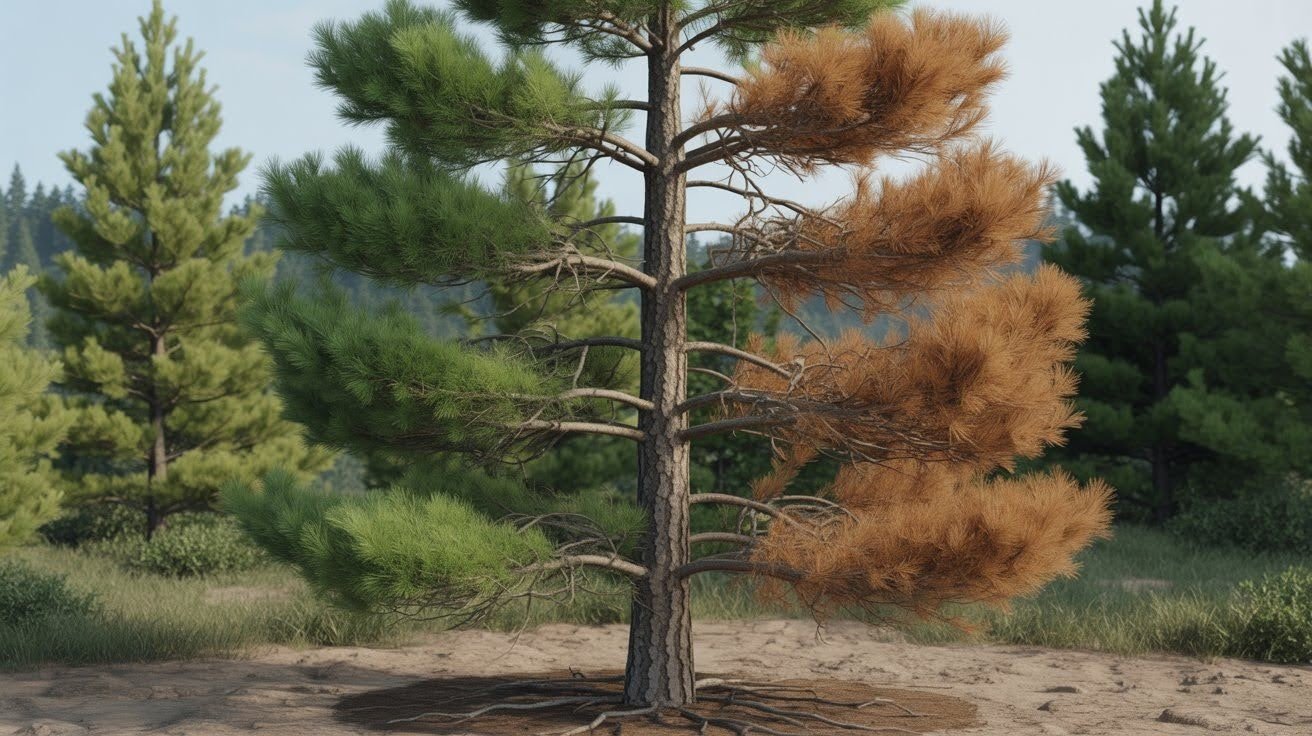
The location where browning begins gives important clues about what’s killing your pine tree and what you can do.
Browning from the Bottom Up
Lower branches browning first usually means drought stress or root problems. The tree can’t pull enough water from damaged or dry roots.
Water deeply and slowly at the drip line, not against the trunk. Check soil moisture regularly and ensure water doesn’t pool around the base.
Browning from the Top Down
Top-down browning is more serious. Bark beetles often start at the top and work down. Pine wilt disease and winter burn also kill from the top first.
Get a professional inspection quickly. These problems progress rapidly. An arborist can identify the cause and recommend treatment. Bark beetle infestations may require immediate removal to protect nearby trees.
Simple At-Home Tests to Check for Life
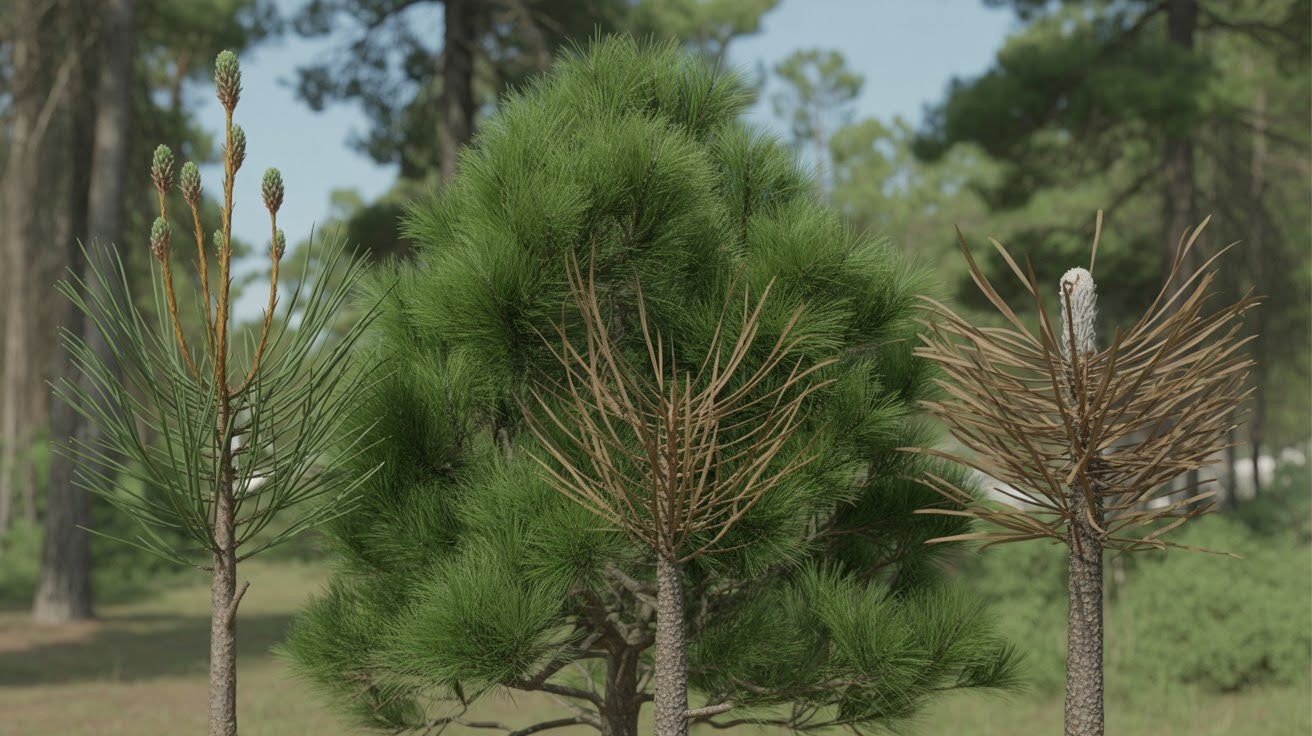
Try these easy tests yourself to determine if your pine tree still has life or has died completely.
Scratch Test
Use your fingernail or knife to gently scrape away a small section of outer bark on a branch. Green or white moist tissue means the branch is alive.
Brown, tan, or gray dry tissue means it’s dead. Test multiple branches at different locations for accurate results.
Bend Test
Try to bend smaller branches gently. Living branches flex without breaking and feel somewhat pliable.
Dead branches snap easily with little pressure, breaking cleanly like dry twigs. If most branches snap, your tree is likely dead.
Bud Inspection
Look at branch tips in late winter or early spring. Healthy pines form small buds that appear as slightly swollen areas at branch ends.
No visible buds anywhere on the tree suggest death. Complete absence of buds indicates the tree has stopped all growth processes.
When to Call a Professional Arborist
Some situations require expert assessment because the signs are unclear or the stakes are too high for guessing.
Call a professional when your tree shows mixed signs, like some dead branches but also green needles. Arborists have the training and tools to diagnose complex situations, test for diseases, and identify pest species accurately.
Arborists provide written reports and determine if treatment can save the tree or if removal is necessary. Their expertise prevents wasting money on ineffective treatments.
Get immediate evaluation for trees leaning toward your house, large dead branches over walkways, or trees near power lines. Don’t risk injury or property damage. Call an arborist when safety is at stake.
When to Remove a Dead Pine Tree
Understanding when removal becomes necessary protects your property and prevents problems from spreading to healthy trees.
Garden expert Randy Lemmon offers practical advice: if the entire tree has turned brown, remove it. Completely brown foliage means the tree is dead and won’t recover.
Dead trees become falling hazards. They drop branches without warning and strong winds can topple them onto houses, cars, or people. Remove dead pines to stop disease and pest spread to neighboring trees.
Act quickly because removal costs increase over time. Dead trees become more brittle and dangerous. The longer you wait, the more expensive and hazardous removal becomes.
Final Thoughts
Years ago, I lost a lovely pine to bark beetles. I hoped it would recover, but I waited too long. I could have saved money and safeguarded my other trees if I had known how to spot dead pine trees sooner.
Regularly check your pines for the signs we discussed. You might be able to save the tree if you catch issues early. Remove it quickly and safely if it’s gone.
Are you worried about your pine tree? Post your observations in the comments section. Together, let’s solve it.
Frequently Asked Questions
Can a brown pine tree come back to life?
No, a completely brown pine tree is dead and won’t recover. If some green needles remain, the tree may survive with proper care and treatment for the underlying problem.
How long does it take for a pine tree to die?
Pine tree death varies by cause. Bark beetles can kill a tree in weeks to months. Drought stress or disease may take one to three years. Sudden wilt diseases kill within days.
What kills pine trees quickly?
Pine wilt disease, bark beetle infestations, and lightning strikes kill pine trees the fastest. Severe drought during hot weather can also cause rapid decline and death within one growing season.
Should I water a dying pine tree?
Water a dying pine if drought is the cause, but don’t overwater. Check soil moisture first. If disease or pests are the problem, watering won’t help and may worsen fungal infections.
How much does it cost to remove a dead pine tree?
Dead pine removal costs $500 to $2,000 for average-sized trees. Large pines over 80 feet or trees near structures cost $2,000 to $5,000. Get multiple quotes from licensed, insured arborists.


